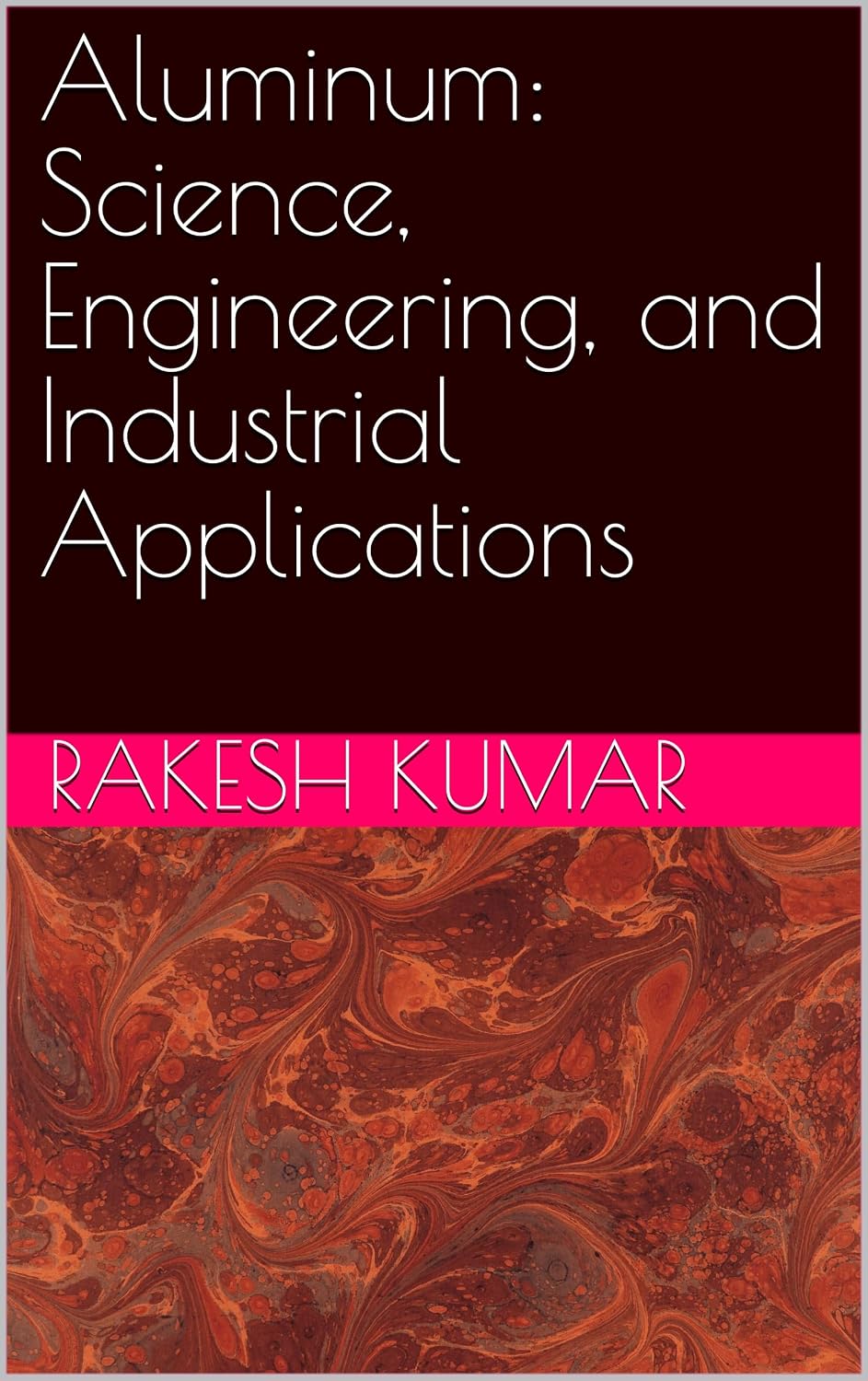
capítulo por capítulo baixar Aluminum: Science, Engineering, and Industrial Applications (English Edition)
por Rakesh Kumar
Leia uma amostra
Aluminum: Science, Engineering, and Industrial Applications (English Edition)
Aluminum is one of the most remarkable engineering materials ever discovered, playing a fundamental role in shaping modern civilization. As the third most abundant element and the most abundant metal in the Earth's crust, aluminum has transformed industries through its unique combination of lightweight characteristics, excellent corrosion resistance, high strength-to-weight ratio, superior thermal and electrical conductivity, and exceptional recyclability. From aircraft soaring through the skies to high-speed trains, electric vehicles, skyscrapers, consumer electronics, renewable energy systems, food packaging, and space exploration, aluminum has become an indispensable material for technological advancement and sustainable development.
Although aluminum is abundant in nature, it does not occur in its metallic form. Its commercial production became possible only after the development of the Bayer Process for alumina extraction and the Hall–Héroult electrolytic process for aluminum production in the late nineteenth century. These technological breakthroughs transformed aluminum from a rare and precious metal into one of the world's most widely used industrial materials. Today, millions of tonnes of aluminum are produced annually, supporting global economic growth, infrastructure development, transportation, manufacturing, and clean energy initiatives.
The twenty-first century has witnessed unprecedented demand for aluminum driven by rapid urbanization, industrialization, and the global transition toward low-carbon technologies. Lightweight transportation systems, electric vehicles, renewable energy infrastructure, sustainable construction, smart cities, advanced aerospace systems, and digital manufacturing all rely heavily on aluminum and its alloys. At the same time, increasing environmental awareness has accelerated research into energy-efficient production methods, carbon-neutral smelting, advanced recycling technologies, and circular economy practices, making aluminum one of the most sustainable engineering materials available.
Modern aluminum science extends far beyond conventional metallurgy. Advances in computational materials science, nanotechnology, additive manufacturing, artificial intelligence, machine learning, digital twins, robotics, and Industry 4.0 have revolutionized the way aluminum is designed, manufactured, tested, and utilized. Intelligent manufacturing systems now employ real-time process monitoring, predictive maintenance, automated quality control, and data-driven decision-making to improve productivity while minimizing waste, energy consumption, and environmental impact. The emergence of Industry 5.0 further emphasizes the integration of human expertise with intelligent automation, sustainability, and resilient manufacturing systems.
This book, "Aluminum: Science, Engineering, and Industrial Applications," has been written to provide a comprehensive, multidisciplinary understanding of aluminum from its scientific foundations to its advanced industrial applications. It is intended to serve as a valuable reference for students, researchers, practicing engineers, scientists, academicians, policymakers, and industry professionals seeking an in-depth understanding of one of the world's most versatile engineering materials.
The book begins with the history, occurrence, extraction, physical properties, chemical characteristics, and metallurgy of aluminum, establishing the scientific principles that underpin its behavior and performance. It then explores aluminum alloys, heat treatment, surface engineering, casting technologies, forming processes, machining, joining methods, and additive manufacturing, illustrating how processing techniques influence material properties and industrial performance.Subsequent chapters examine the extensive applications of aluminum across aerospace, automotive engineering, construction, electrical engineering, packaging, marine engineering, medical devices etc.
Procurando Aluminum: Science, Engineering, and Industrial Applications (English Edition)? Aqui você encontra tudo sobre este livro de Rakesh Kumar. Nesta página estão a descrição da obra, os detalhes da edição (575 páginas) e os formatos disponíveis para baixar: pdf, ibook, epub, kindle. Se você gosta de Inglês e Outras Línguas, Por Idioma, eBooks em inglês, Ciência e Tecnologia, explore também outros títulos da mesma categoria no Porto do livro Português. Veja ainda as outras obras de Rakesh Kumar em nosso catálogo.







Autores populares
Unknown Author (193) Barrett Williams (163) ChatGPT ChatGPT (122) Сергей Каледин (100) Lyudmil Tsvetkov (95) Sharifa McFarlane (92) Kingston Publishing (76) YouGuide (52) animarueaidezain (49) Rodrigo B Santos (48) Nikolay Krechet (46) Hayden Van Der Post (45) Coins and More (42) Editora Europa (42) Evgeniia Naumchenko (40) SHIZUOKANOSORATETSU (40) Manoj Palwe (39) Various (39) Clayton Louis Turnage (38) keieisyakentoushikaken (37)Principais publicadores
Forgotten Books Routledge CRC Press HardPress Springer LitRes PublishDrive Packt Publishing OUP Oxford Tirant Lo Blanch Palgrave Macmillan epubli Wiley Chapman and Hall/CRC Hart Publishing Aspen Publishing Cambridge University Press Bloomsbury Academic Penguin Oxford University Press