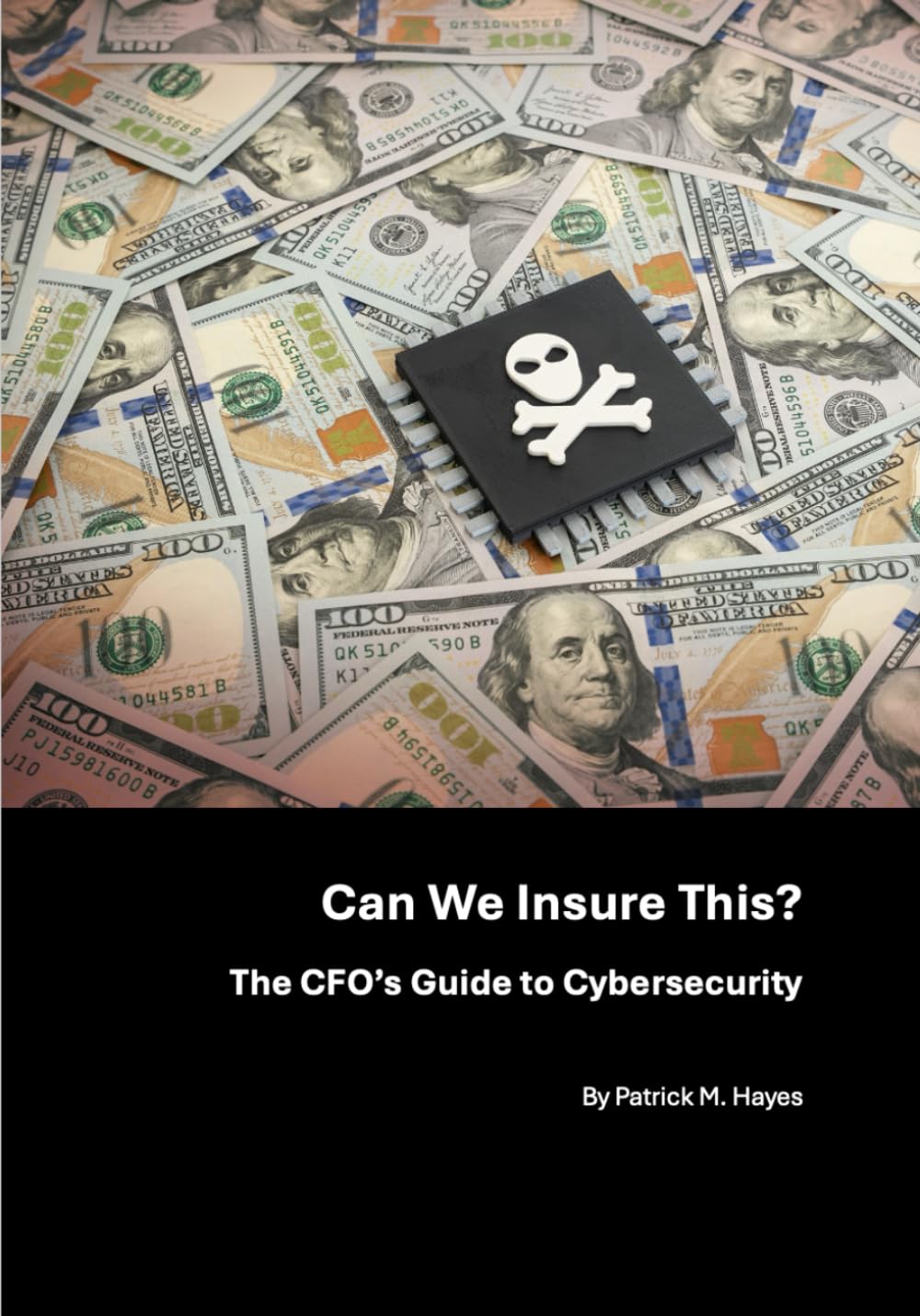
capítulo por capítulo baixar Can We Insure This?: The CFO’s Guide to Cybersecurity
por Patrick M. Hayes
Can We Insure This?: The CFO’s Guide to Cybersecurity
Something has shifted in how risk works inside a business, and most organizations haven’t fully caught up. For years, cybersecurity was treated as a technical function. As long as the right tools were in place and compliance boxes were checked, risk was assumed to be under control. That approach doesn’t hold up anymore. Today, risk moves across systems, vendors, contracts, and operations, often turning a small technical issue into a financial, legal, or operational problem faster than most teams expect. If you’re a CFO, business owner, or executive, you’ve probably already felt this shift. Insurance renewals take longer. Questions get more detailed. Premiums increase without a clear explanation. Coverage tightens or disappears entirely. At the same time, your business continues to adopt cloud platforms, third-party services, and AI-driven tools that make operations faster, but also harder to fully understand. This guide was written to make sense of that reality. Instead of focusing on technical controls or compliance frameworks, it looks at cyber risk the way the financial world sees it. Through the lens of loss, exposure, and recovery. It explains why internal confidence often doesn’t match external judgment, and how that gap shows up in real terms through insurance pricing, coverage decisions, and financial impact. At the center of the book is a simple but powerful question: Can we insure this? That question forces clarity. It shifts the conversation away from activity and toward outcomes. Not what has been implemented, but whether it actually reduces the likelihood of loss, limits financial impact, and supports recovery when something goes wrong. Inside, you’ll learn: This is not a technical deep dive. You won’t find product recommendations or complex frameworks. Instead, you’ll get a practical way to think about risk as part of how your business operates day to day. For small and midsize organizations, this perspective is critical. A single incident can have an outsized impact on revenue, operations, and long-term stability. At the same time, resources are limited, and every decision needs to be tied to real outcomes, not just effort. This guide helps you focus on what actually matters. Understanding where risk exists, how it behaves under pressure, and whether your business can absorb the impact if something goes wrong. Because risk is no longer just a technical issue. It is a financial reality that affects how your business performs, how it is evaluated by insurers and partners, and whether it can continue to operate under stress. You don’t need to eliminate risk. That’s not realistic. But you do need to understand it well enough to carry it. And if you can’t clearly explain it in financial terms, or an insurer won’t take it on, that’s usually where the real exposure begins.
Procurando Can We Insure This?: The CFO’s Guide to Cybersecurity? Aqui você encontra tudo sobre este livro de Patrick M. Hayes. Nesta página estão a descrição da obra, os detalhes da edição (50 páginas) e os formatos disponíveis para baixar: pdf, ibook, epub, kindle. Se você gosta de Livros Internacionais, Administração, Negócios e Economia, Indústrias e Profissões, Seguro, Gestão de Risco, explore também outros títulos da mesma categoria no Porto do livro Português. Veja ainda as outras obras de Patrick M. Hayes em nosso catálogo.









Autores populares
Icon Group International (285) Publishing lmgdaw (262) Nikolay Krechet (164) Kennie B Journals (112) Riddler Books (98) Charles Nehme (95) webmarbook design (95) Mint and Cherry Notebooks (79) Iwona Makara (76) Mary Hirose (75) NAK Legal Publishing (74) Jillo Trukudo (73) Just Visualize It (69) Quick Witted Coconut (67) Talor Press (67) matlasor Sticker's (64) Miller Sye (63) Moonpeak Library (63) Ondrej Sarek (63) Roggie Clark (63)Principais publicadores
Forgotten Books Independently published Routledge Dover Publications CRC Press Taschen Princeton University Press Wiley Oxford University Press Springer Cambridge University Press Kessinger Publishing Thames & Hudson Gale, U.S. Supreme Court Records Bloomsbury Academic O'Reilly Media Rizzoli International Publications Hal Leonard Publishing Corporation Tuttle Publishing Editorial Tirant lo Blanch