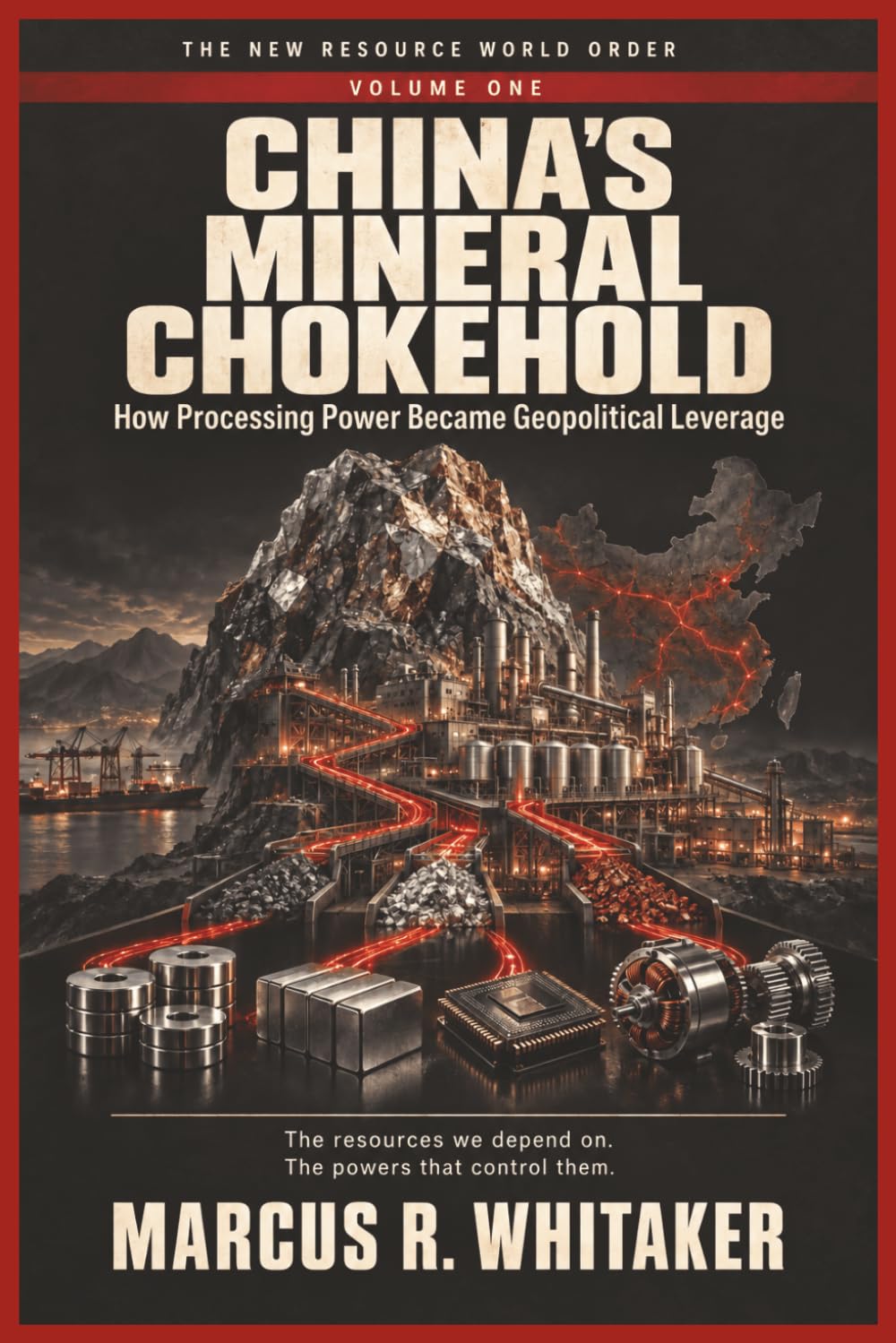
China's Mineral Chokehold: How Processing Power Became Geopolitical Leverage: 2 pdf
por Marcus R Whitaker



Descrição do livro
A country can own a mine and still depend on someone else to make its minerals usable.From phones and electric vehicles to advanced machinery and national defense, modern life relies on materials that must be refined, engineered, and tested before they can perform their essential jobs. The most consequential point of control often lies between the deposit and the finished product. China's Mineral Chokehold follows that industrial middle. Marcus R. Whitaker explains how China developed concentrated processing capacity, specialized expertise, and closely connected supplier networks, and why opening a new mine cannot immediately replace them. The book traces rare earth magnets, graphite battery anodes, gallium, germanium, tungsten, and antimony through distinct supply chains. It examines export licensing, pricing pressure, replacement delays, and the testing required before manufacturers can switch suppliers. Readers see how a small missing input can disrupt a much larger industrial system. The analysis also examines the limits of coercion and the choices available to the United States and its partners: alternative processing, allied investment, recycling, substitution, and more productive relationships with resource-producing countries. Volume One of The New Resource World Order reveals an industrial foundation of the wider contest over global leadership. With analytical figures and documented sources, it explains when dependence becomes political power and what it takes to restore meaningful strategic choice.







Autores populares
Icon Group International (285) Publishing lmgdaw (262) Nikolay Krechet (164) Kennie B Journals (112) Riddler Books (98) Charles Nehme (95) webmarbook design (95) Mint and Cherry Notebooks (79) Iwona Makara (76) Mary Hirose (75) NAK Legal Publishing (74) Jillo Trukudo (73) Just Visualize It (69) Quick Witted Coconut (67) Talor Press (67) matlasor Sticker's (64) Miller Sye (63) Moonpeak Library (63) Ondrej Sarek (63) Roggie Clark (63)