


Descrição do livro
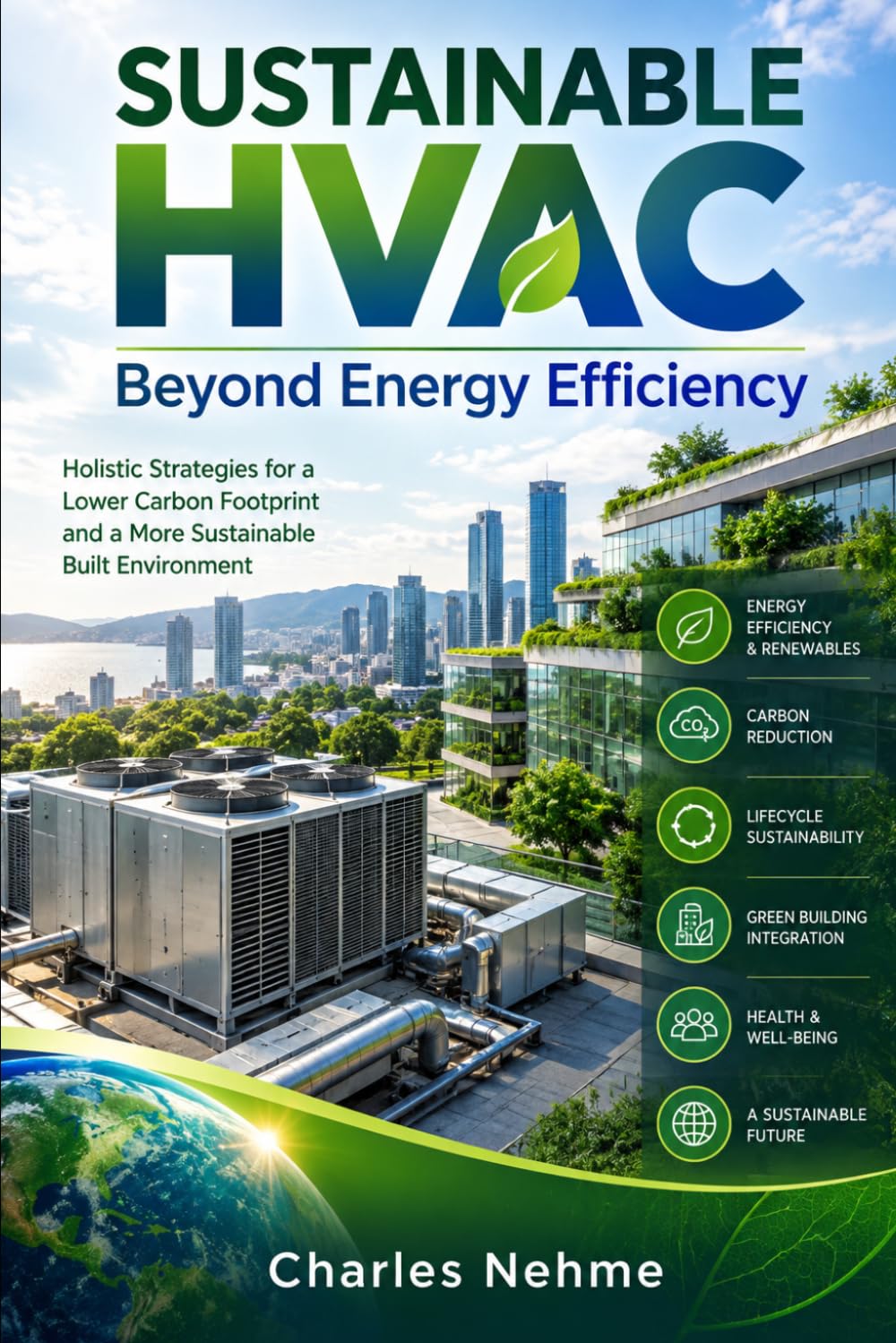
For decades, HVAC sustainability has often been reduced to a relatively simple objective: use less energy. Energy efficiency remains extremely important, but it is only one part of a much larger sustainability challenge. An HVAC system can consume less electricity and still create significant environmental impacts through refrigerant leakage, excessive water consumption, intensive use of raw materials, premature equipment replacement, poor maintenance, waste generation, or inadequate consideration of indoor environmental quality. A system may also be highly efficient under laboratory conditions but perform poorly in an actual building because of inappropriate controls, poor commissioning, changing occupancy, neglected maintenance, or unsuitable operating strategies. True HVAC sustainability requires a broader perspective. This book explores HVAC from a whole-lifecycle sustainability perspective. It considers how systems are selected, designed, manufactured, installed, commissioned, operated, maintained, upgraded, and eventually decommissioned. At every stage, engineers and building owners have opportunities to reduce environmental impact while improving reliability, comfort, health, resilience, and long-term value. The discussion extends beyond electricity consumption to include carbon emissions, refrigerants, water, materials, indoor air quality, equipment longevity, maintenance, circularity, resilience, and climate adaptation. The objective is not to promote one particular HVAC technology. Different buildings, climates, applications, energy infrastructures, and operational requirements demand different solutions. A strategy that is sustainable in one environment may be inappropriate in another. Instead, this book provides a framework for asking better questions: These questions demonstrate why sustainability cannot be treated as a single efficiency rating. A sustainable HVAC system should deliver appropriate thermal conditions, healthy indoor environments, reliable operation, responsible resource consumption, and long-term environmental performance. The chapters that follow are deliberately practical. They are intended to help HVAC professionals integrate sustainability into design reviews, specifications, equipment selection, commissioning, maintenance programs, retrofit decisions, facility management, and long-term asset planning. No formulas are used in this book. Instead, technical relationships are explained through engineering principles, qualitative comparisons, practical procedures, tables, checklists, and decision-making guidance. The ultimate goal is simple: Move HVAC sustainability from a narrow energy-efficiency exercise to a complete lifecycle engineering discipline.










Autores populares
Icon Group International (285) Publishing lmgdaw (262) Nikolay Krechet (164) Kennie B Journals (112) Charles Nehme (108) Riddler Books (98) webmarbook design (95) Mint and Cherry Notebooks (79) Iwona Makara (76) Mary Hirose (75) NAK Legal Publishing (74) Jillo Trukudo (73) Just Visualize It (69) Quick Witted Coconut (67) Talor Press (67) matlasor Sticker's (64) Miller Sye (63) Moonpeak Library (63) Ondrej Sarek (63) Roggie Clark (63)