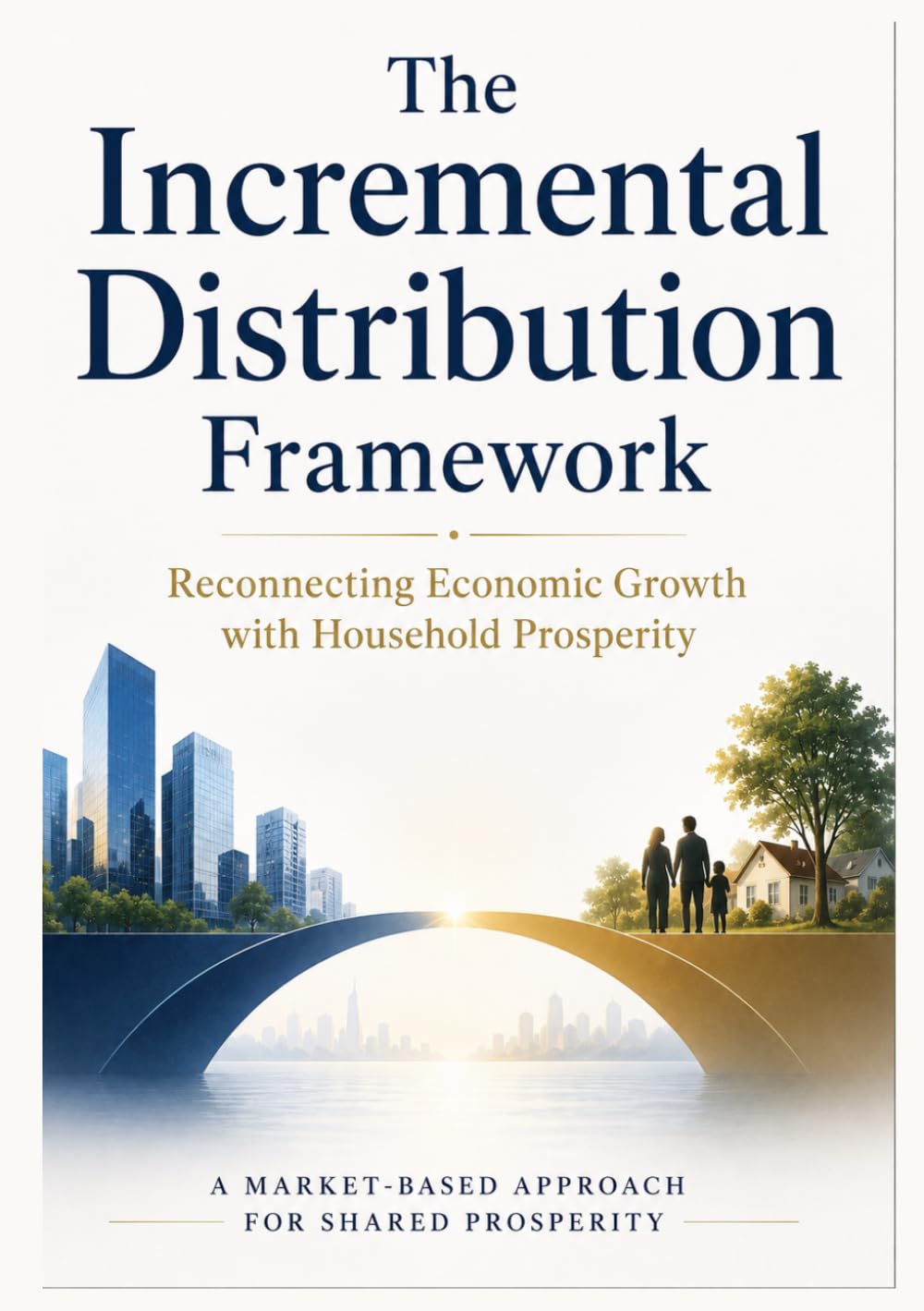
The Incremental Distribution Framework: Reconnecting Economic Growth with Household Prosperity epub
por Toshiki Yoshida



Descrição do livro
Why are corporate profits reaching record highs while ordinary households continue to struggle? Across many advanced economies, businesses are reporting stronger earnings than ever before. Stock markets continue to grow, shareholder returns have expanded, and technological innovation is accelerating. Yet for millions of working families, everyday life has become increasingly difficult. Why has economic growth become disconnected from household prosperity? This book argues that the answer lies not simply in how much wealth is created, but in how newly created wealth is distributed. Rather than blaming corporations, investors, or markets, The Incremental Distribution Framework examines the incentives embedded within modern shareholder capitalism and asks a different question: Can we redesign the rules of distribution without abandoning the market economy? This book introduces the Incremental Distribution Framework—a market-based proposal that allocates newly generated corporate profits among wages, investment, shareholder returns, and retained earnings according to transparent, predetermined principles. Instead of relying solely on taxation or government redistribution after profits have already been earned, this framework focuses on how incremental profits are distributed at the moment they are created, aiming to reconnect economic growth with broad-based prosperity while preserving incentives for innovation and investment. Using Japan as its primary case study, the book explores structural trends that are increasingly relevant across many developed economies. Why wage growth has stalled despite record corporate profits How shareholder capitalism has reshaped corporate incentives The changing relationship between profits, dividends, and labor's share of income Why traditional "trickle-down" assumptions no longer fully explain today's economy The economic consequences of widening inequality How the Incremental Distribution Framework seeks to reconnect growth with household prosperity Practical responses to the most common criticisms of market-based distribution reform This is not a critique of capitalism. It is not an argument against shareholders or business success. Instead, it is an invitation to rethink one of the central assumptions of modern economics: Should economic growth automatically improve people's lives—or do we need better institutions to make that happen? Whether you are interested in economics, public policy, political economy, or the future of capitalism, this book offers a fresh perspective on one of the defining challenges of the twenty-first century.












Autores populares
Icon Group International (285) Publishing lmgdaw (262) Nikolay Krechet (164) Kennie B Journals (112) Riddler Books (98) Charles Nehme (95) webmarbook design (95) Mint and Cherry Notebooks (79) Iwona Makara (76) Mary Hirose (75) NAK Legal Publishing (74) Jillo Trukudo (73) Just Visualize It (69) Talor Press (68) Quick Witted Coconut (67) matlasor Sticker's (64) Miller Sye (63) Moonpeak Library (63) Ondrej Sarek (63) Roggie Clark (63)