The Moving Line: Constraint, Labor, and the Evolution of Animation ibook
por Ian Robinson



Leia uma amostra
Descrição do livro
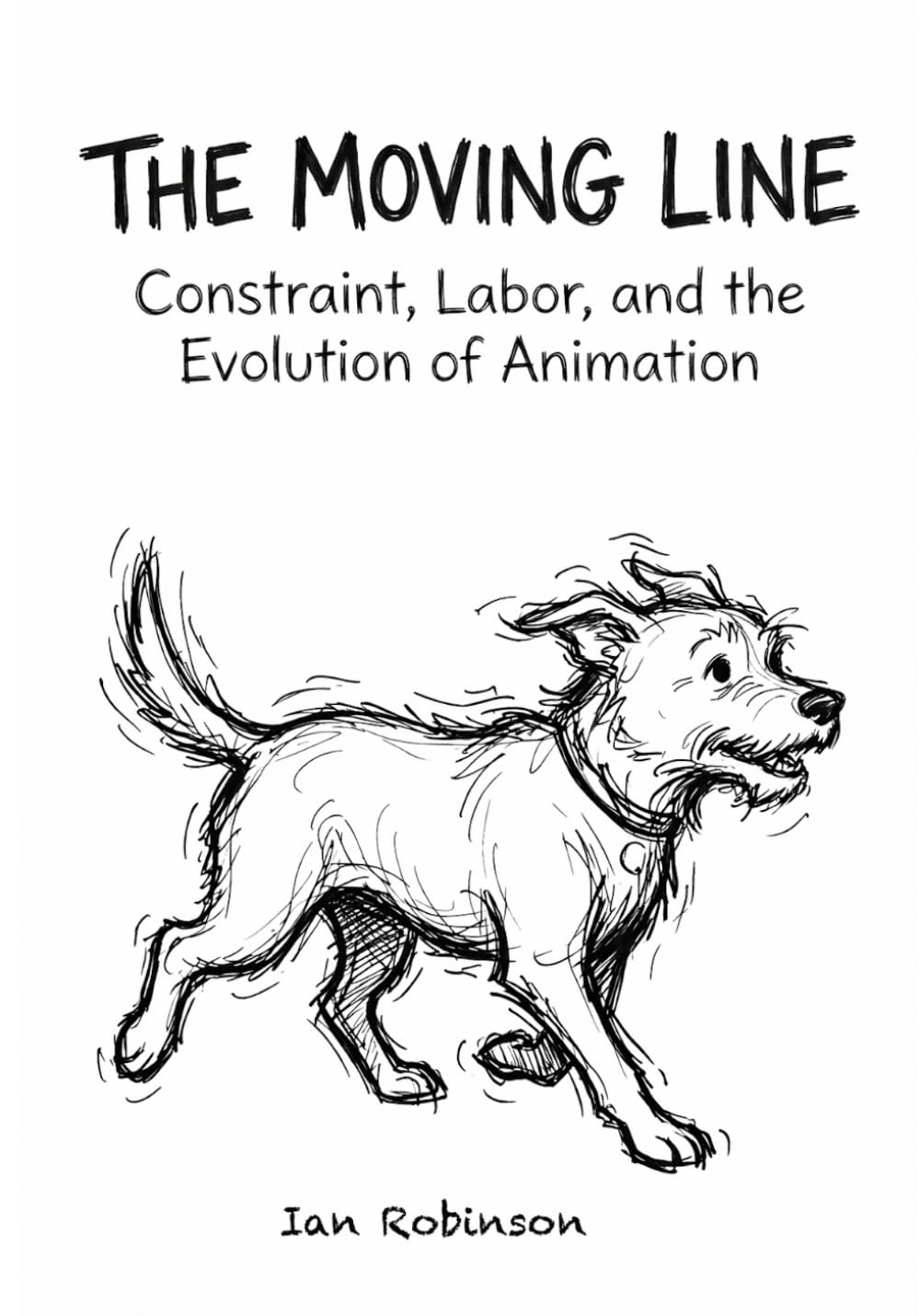
Five thousand years ago, in what is now southeastern Iran, someone painted a series of images of a leaping goat around the circumference of a ceramic bowl. When the bowl was spun, the goat appeared to move. Whether this was intentional or accidental, we cannot know. What we do know is that the impulse it represents the desire to make the still come alive, to breathe motion into the motionless is one of the oldest and most persistent compulsions in human culture. The Moving Line follows that compulsion across five millennia, from ancient optical illusions to the AI-generated videos now triggering cease-and-desist orders from major entertainment companies. But this is not a dry technical timeline. It is a vivid, deeply researched cultural history built around a single compelling argument: that animation's greatest achievements have always emerged not from unlimited freedom but from constraint. From limitation. From the friction between what artists wanted to create and what their tools, budgets, materials, and political circumstances actually allowed. The book reveals how the punishing economics of early cinema forced animators to invent the fundamental grammar of the medium from first principles. How Walt Disney built an unprecedented creative infrastructure and how a bitter labor strike inside that infrastructure planted the seeds of a Modernist revolution that transformed what cartoons could look like and mean. How the impossible budgets of television forced Hanna-Barbera to engineer an entirely new visual language one in which Fred Flintstone's necktie wasn't a fashion choice but a production hack that separated independently animated head cels from body cels. How the specific chemistry of Japanese cel paint, the translucency of acetate, and the philosophy of ma the deliberate pause, the empty space produced an aesthetic warmth that digital production has never fully replicated. The narrative travels from Hollywood assembly lines to a converted barn in the English countryside where two men with wool, felt, and a secondhand camera created some of the most beloved characters in British cultural history. From the surrealist studios of Cold War Prague and Moscow where animators used the medium's perceived innocence to smuggle political allegory past state censors to the clay-and-fingerprint world of Aardman Animations, where the visible thumbprint in the plasticine became not a flaw to be corrected but the signature of a philosophy. From Pixar's polygon revolution and the explosive graphic innovation of Spider-Man: Into the Spider-Verse to the anime studios of Tokyo, where artists working under grueling conditions built one of the most influential visual cultures the world has ever seen. And then the book arrives at the present moment a moment unlike any the medium has faced before. Generative AI tools can now reproduce, with startling fidelity, the visual language of animation traditions that took decades to develop. When millions of users generated "Studio Ghibli-style" images through ChatGPT in 2025, they experienced a warmth that felt real but that warmth had been extracted, without permission or compensation, from the life's work of specific artists. The Moving Line does not pretend these questions have easy answers. Instead, it provides what the conversation desperately needs: context. Deep, specific, historically grounded context that reveals what animation styles actually are not just aesthetic choices but records of human labor, cultural conditions, material properties, and philosophical commitments. The book asks: in a world where any visual style can be computationally simulated, what is the value of that fingerprint? What is lost when the appearance of warmth can be generated without the hands that created it? For artists, animators, filmmakers, designers, technologists, and anyone who has ever been moved by a moving image.








Autores populares
Editora Europa (328) Icon Group International (285) Publishing lmgdaw (262) Nikolay Krechet (164) Kennie B Journals (112) Riddler Books (98) Charles Nehme (95) webmarbook design (95) On Line Editora (82) Vários Autores (80) Mint and Cherry Notebooks (79) Iwona Makara (76) Mary Hirose (75) NAK Legal Publishing (74) Jillo Trukudo (73) Just Visualize It (69) Talor Press (68) Joseph Alexander (67) Quick Witted Coconut (67) matlasor Sticker's (64)