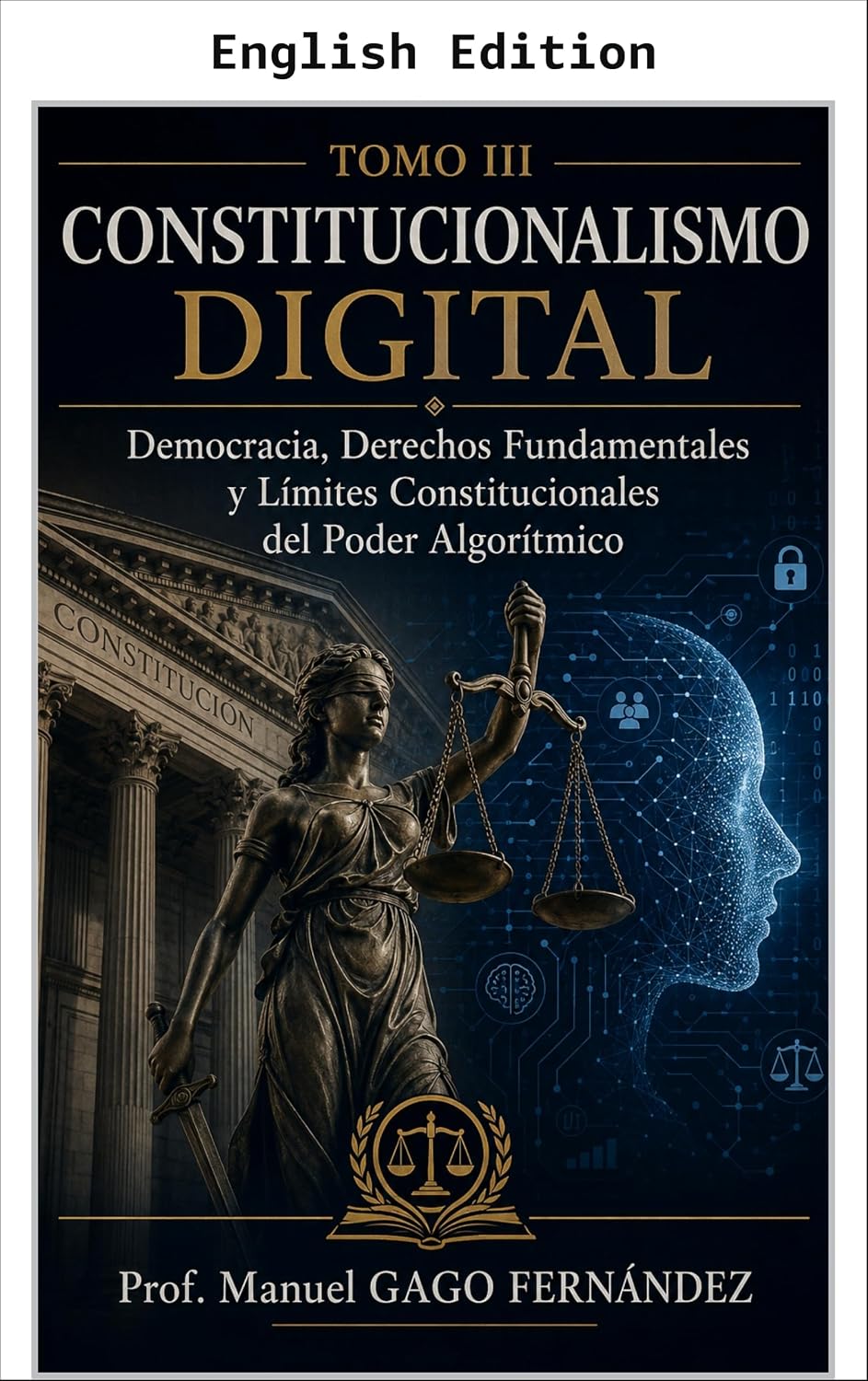
Volume III — Digital Constitutionalism (Algorithmic Civilization) (English Edition) pdf
por Prof. Manuel GAGO FERNÁNDEZ



Leia uma amostra
Descrição do livro
Volume III — Digital Constitutionalism is a scholarly work designed to analyze the contemporary transformation of the Rule of Law within algorithmic civilization.
The expansion of artificial intelligence, institutional automation, digital platforms, and global computational infrastructures is structurally modifying the relationship between democracy, sovereignty, fundamental rights, economy, information, and the exercise of contemporary power.
The great constitutional question of the 21st century no longer consists solely of limiting traditional political power. It consists of determining how to preserve human dignity, freedom, democracy, popular sovereignty, and the Rule of Law in the face of algorithmic systems capable of influencing, surveilling, classifying, automating, and reorganizing essential aspects of human and social life.
The work develops a comprehensive architecture of Digital Constitutionalism addressing:
• Digital Fundamental Rights
• Algorithmic Democracy
• Digital Constitutional Sovereignty
• Constitutional Control of Computational Power
• Algorithmic Surveillance and Freedom
• Digital Platforms and Systemic Power
• Neurorights and Cognitive Integrity
• Constitutional Reserve of Humanity
• Data Capitalism and Algorithmic Governance
• Cognitive Sovereignty and Computational Manipulation
• Digital Legal Security
• Constitutional Law of Artificial Intelligence
• Computational Civilizational Risk
• Constitution and the Future of Humanity
The treatise analyzes how advanced artificial intelligence, decisional automation, digital platforms, and technological concentration transform classic constitutional categories of legality, sovereignty, separation of powers, democratic control, institutional accountability, and protection of fundamental rights.
The work specifically develops the need to construct new constitutional architectures capable of guaranteeing:
• meaningful human oversight,
• algorithmic accountability,
• digital traceability,
• AI system explainability,
• technological proportionality,
• democratic sovereignty,
• and constitutional supremacy over computational power.
This volume maintains that artificial intelligence does not constitute merely a technological innovation. It represents a structural transformation of the contemporary exercise of power.
Precisely for this reason, all legitimate algorithmic governance must remain subordinate to human dignity, freedom, democracy, fundamental rights, and effective constitutional control.
Volume III — Digital Constitutionalism is part of the scholarly collection on Digital Legal Security and Algorithmic Governance developed by Prof. Manuel GAGO FERNÁNDEZ, focused on the legal, philosophical, and constitutional analysis of contemporary technological civilization.











Autores populares
Nikolay Krechet (210) Unknown Author (194) Barrett Williams (163) ChatGPT ChatGPT (122) Evgeniia Naumchenko (101) Сергей Каледин (100) NAK Legal Publishing (96) Lyudmil Tsvetkov (95) Sharifa McFarlane (92) Kingston Publishing (76) Office of the Federal Register (61) Vários Autores (59) CONGRESO DE LA UNIÓN (55) YouGuide (52) animarueaidezain (49) E.N FUUBE (49) Rodrigo B Santos (48) Hayden Van Der Post (45) Coins and More (42) Manoj Palwe (41)